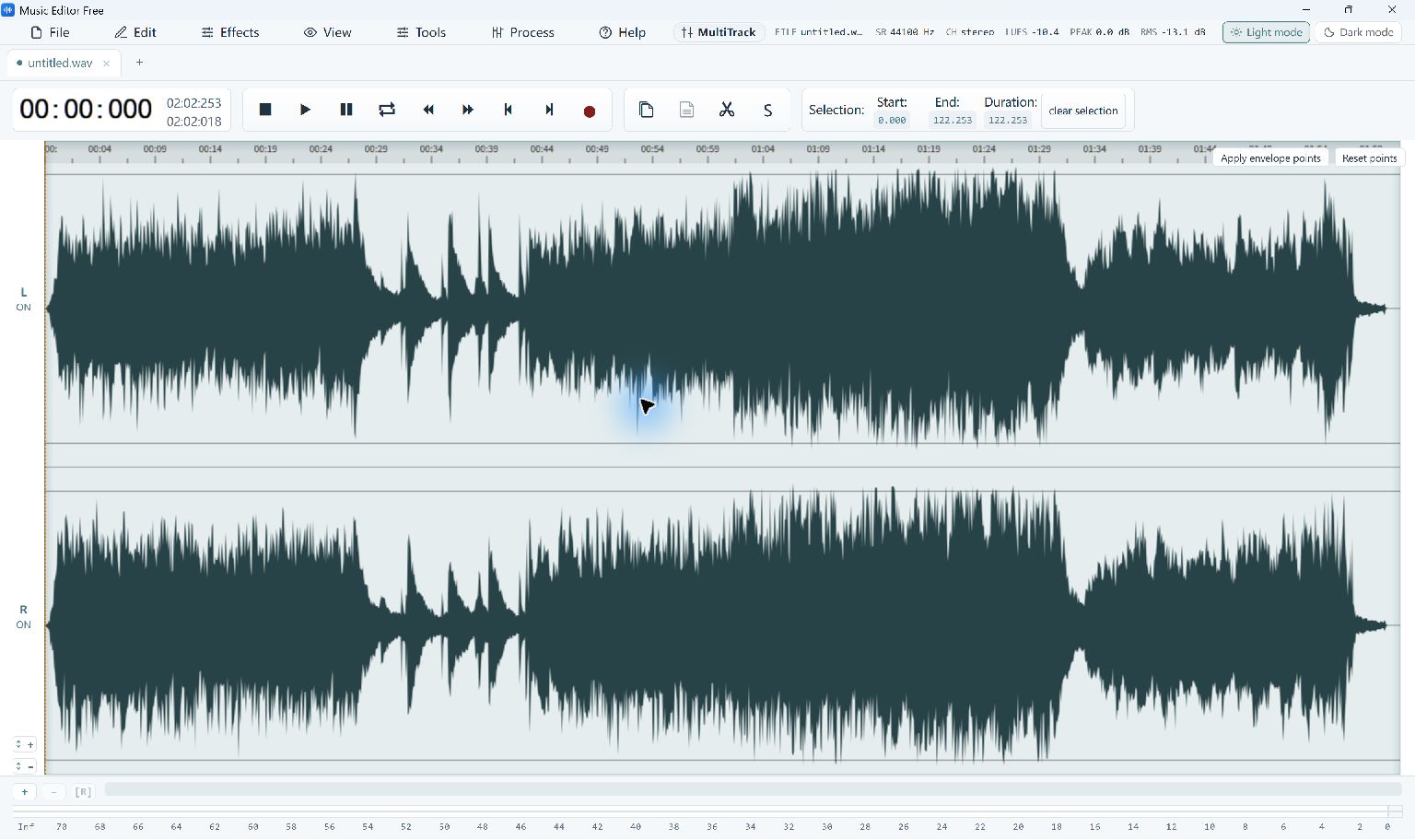
Text-to-speech turns written text into a voice recording. Audio editing changes a recording that already exists. The current Music Editor Free can open, record and edit audio, but the earlier built-in speech-synthesis instructions on this address are not a current documented feature of this download.
Create and Edit a Speech Recording
- Prepare the Words. Write a short script and read it aloud. Break long sentences and check pronunciation before making an entire recording; editing a clear source is easier than repairing a rushed one.
- Create the Speech Audio. Record your own microphone in Music Editor Free, or obtain a speech file from a separate service or tool whose terms permit your intended use.
- Open the Recording. Import the supported audio into the editor. Keep the original speech file and work from a copy so you can return to an untouched version.
- Edit the Timing. Trim unwanted pauses and false starts, then listen across each boundary. Use modest fades or level changes where they help the spoken track fit its purpose.
- Export and Check. Choose File → Convert / Export… and save a separate output. Listen to the complete file for pronunciation, missing words and abrupt edits before sharing it.
Check the Quality and Output
Do not download the editor expecting the legacy text-to-speech dialog, voice list or automatic reading of typed text. A separate generated-voice source may have its own account, network or license requirements; the editor’s free status does not change those terms.
For a voiceover, a short microphone test can reveal room noise and input distortion before you record the final script.